
Reviewed · ROTTNEST ISLAND FERRIES & BIKE HIRE
Rottnest Island: Tandem Skydive
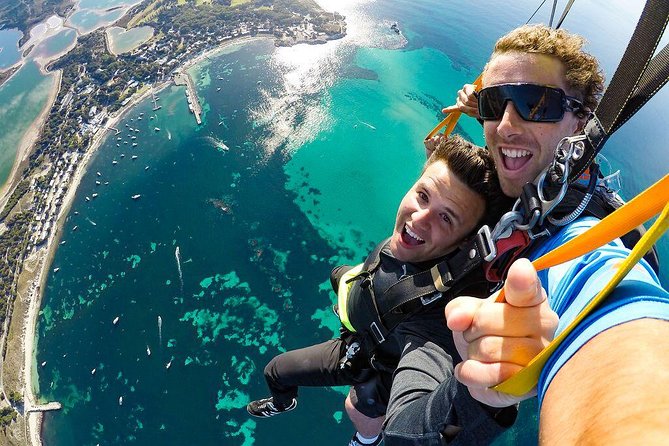
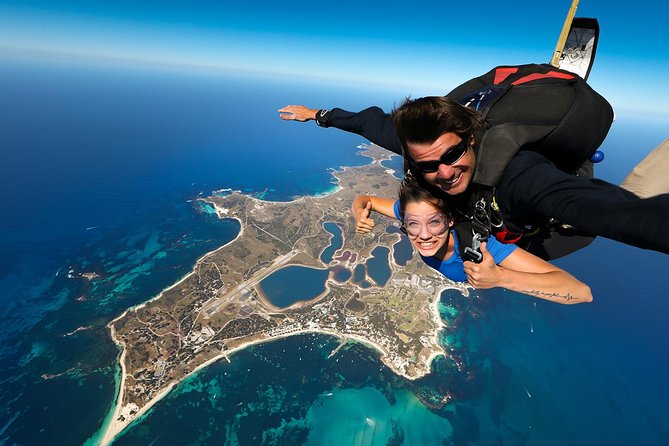
Rottnest Island looks unreal from above. I love the altitude choice (10,000 or 15,000 feet) and I love finishing with a beach landing right after freefall. You’ll climb, exit in tandem, hit up to 200 km/h in freefall, then glide down with your parachute for a smooth end to the day.
This isn’t a guaranteed slot; the experience is weather dependent, and you’ll need to plan your own trip since ferry tickets aren’t included. On top of that, the chief safety instructor assesses eligibility on the day based on weight, height, health, and medical conditions.
In This Review
- Key things I’d pay attention to
- Choosing Your Altitude: 10,000 or 15,000 Feet Over Rottnest Island
- Getting There and Checking In at Rottnest Airfield
- Harness-Up and Safety Briefing: How First-Time Jitters Get Handled
- On the Plane: What the Climb Is For (and What You Should Do With Your Nerves)
- Freefall Timing and Speed: What It Feels Like at 200 km/h
- Parachute Ride and Beach Landing: The Part You Don’t Want to Rush
- Price and Value: What $270 Buys You (and What It Doesn’t)
- Small Group Format: Limited to 3 Participants
- Photo and Video: Get It If You Want a Real Keepsake
- Who This Suits Best (and Who Should Skip It)
- Should You Book This Rottnest Island Tandem Skydive?
- FAQ
- Where do I meet for the tandem skydive?
- Do I need ferry tickets or transport included in the price?
- What altitudes can I choose?
- How long is the freefall?
- What speed and timing should I expect during the jump?
- Is the video and photo package included?
- What should I wear and what isn’t allowed?
- Who can’t skydive?
- What if weather affects the booking?
Key things I’d pay attention to
- Two jump heights: choose 10,000 ft or 15,000 ft for different freefall times
- Up to 66 seconds of freefall: faster than you’ll expect, but controlled in tandem
- Parachute deployment at 5,000 ft: you still get a long canopy ride after the jump
- Small group (max 3): less crowding and more time with your instructor
- Beach landing: you wrap up right where family and friends can watch
- Optional high-definition video/photos: purchase on the day if you want the full keepsake
Choosing Your Altitude: 10,000 or 15,000 Feet Over Rottnest Island
This tandem skydive is built around one smart decision: the altitude you pick. Your jump altitude is either 10,000 ft or 15,000 ft, and that choice mainly affects how long you’ll be in freefall. The listing notes freefall of 30 to 66 seconds, which lines up with the idea that higher altitude means more time before the parachute comes out.
If you’re nervous (totally normal), I like that you can choose a number that feels mentally manageable. Many first-timers prefer the lower height because it shortens the period of not-so-sure feelings. Pick the higher altitude if you want the “longer story” jump—more time to look around and soak in Rottnest Island from above.
One more detail that matters: your parachute is deployed at 5,000 feet. That means even if you choose the higher altitude, you still get a proper canopy ride after deployment. In other words, this is not just a single fast moment; there’s a clear “freefall then glide” structure.
More quokka-island runs, ferries and bike loops sorted
Getting There and Checking In at Rottnest Airfield
The meeting point is the Rottnest Island Terminal Building at Rottnest Airfield. The walk from the Rottnest jetty is listed at about 15 minutes, so don’t plan to show up straight off a sprint from the ferry.
Important practical bit: transport to and from Rottnest isn’t included. You’ll need to make your own way to the island (from Perth or Fremantle), and ferry tickets aren’t part of the booking. If you’re visiting from out of town, I recommend building in extra time for the whole island commute, not just the skydive window.
Once you arrive, your day starts with a warm welcome at the terminal building. You’ll handle paperwork first, then move into harness-up and the safety briefing. Plan on being on-site for the full block of time listed as 150 minutes, even if your actual jump portion feels shorter in your head.
Harness-Up and Safety Briefing: How First-Time Jitters Get Handled
The overall “tone” of this experience is very people-focused: you’re tandem with an instructor, and the team runs the process in a way that helps anxious first-timers function.
The sequence is straightforward:
- paperwork and check-in
- harness-up
- a safety briefing
- then you head out to the plane
What’s especially reassuring is the way multiple instructors and staff get described in the feedback. I saw names like Nick, Darcy, and Heath come up repeatedly in reviews, and the common theme is that they’re friendly and calming when you’re nervous. One review even mentions an instructor taking photos during the jump experience, which hints at a practical skill: they’re prepared to help you focus on what matters, not what’s going wrong in your imagination.
You’ll also want to think about your body on the day. Eligibility is assessed by the chief safety instructor based on factors like weight, height, health, and medical conditions. So if you have any concerns, it’s better to treat this as a safety first situation rather than something you “power through.”
On the Plane: What the Climb Is For (and What You Should Do With Your Nerves)
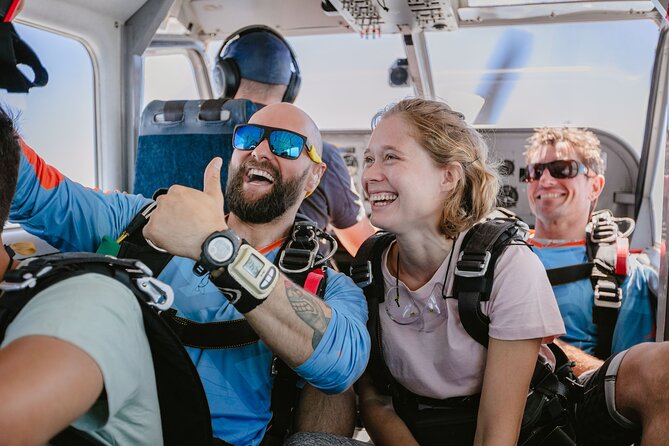
After check-in, you head to the plane. The flight climb is part of the experience. It’s the “pause” before the jump—time to get settled, look around, and feel how close you are to the moment.
Here’s what you’ll actually do: the plane takes you up to your chosen altitude, and you’ll take in the scenery as it climbs. Then, together with your instructor, you move into the exit and freefall phase.
If you tend to get panicky, use the climb time well:
- confirm you understand what your instructor is saying
- take slow breaths during the final approach to the altitude
- focus on the fact you’re strapped to an experienced person in tandem
Reviews back up that approach. People describe feeling reassured and supported, especially for first-time skydiving. A lot of that comes from instructors like Nick and Heath being patient in the lead-up—exactly when you need calm the most.
For the ones who jump first, more adrenaline days
Freefall Timing and Speed: What It Feels Like at 200 km/h
The moment you exit is the big one. Your instructor freefalls with you at around 200 km/h, and the freefall time depends on whether you chose 10,000 ft or 15,000 ft.
The freefall is fast. That’s the selling point, and it’s also why it’s so important that your tandem instructor handles technique and deployment. You’re not trying to “learn skydiving” in midair. You’re experiencing it, safely guided.
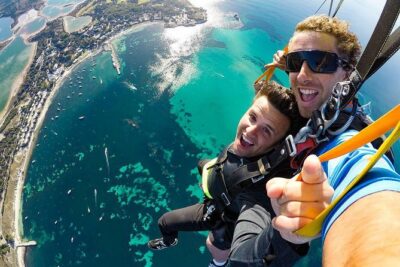
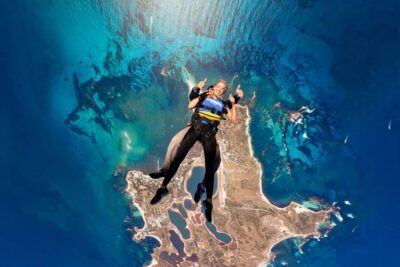
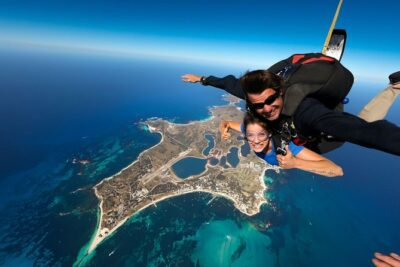
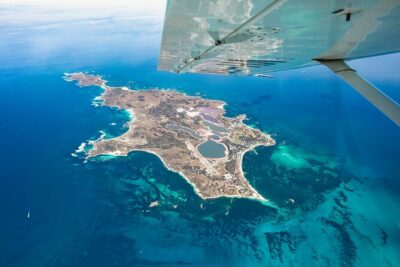
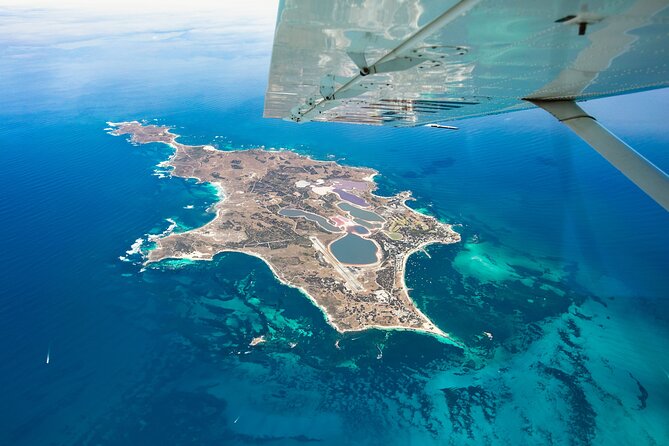
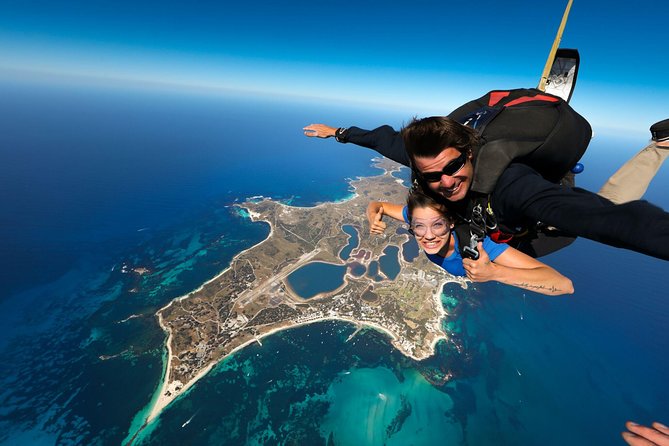
What you should expect visually: you’ll see Rottnest Island from a totally different angle. Even if you’ve looked at the island from beaches or viewpoints, aerial sight lines are different—coastlines curve, water colors change, and you get a sense of scale that just doesn’t show up from land.
Also, you get a clear endpoint:
- your instructor deploys your parachute at 5,000 feet
- that transitions you from fast freefall into a slower, controlled canopy ride
So while the freefall feels intense, it’s not endless. It has a built-in finish line.
Parachute Ride and Beach Landing: The Part You Don’t Want to Rush
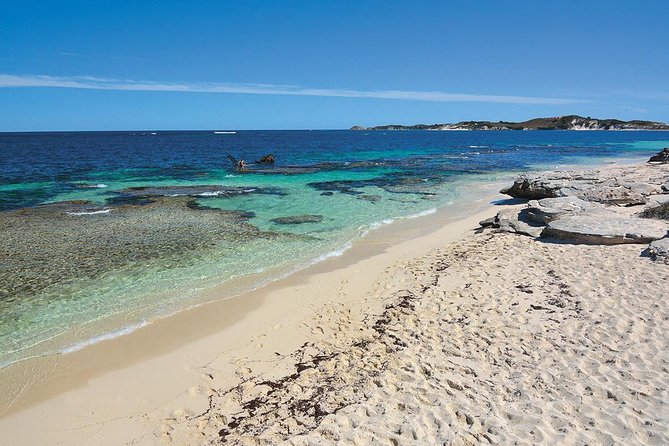
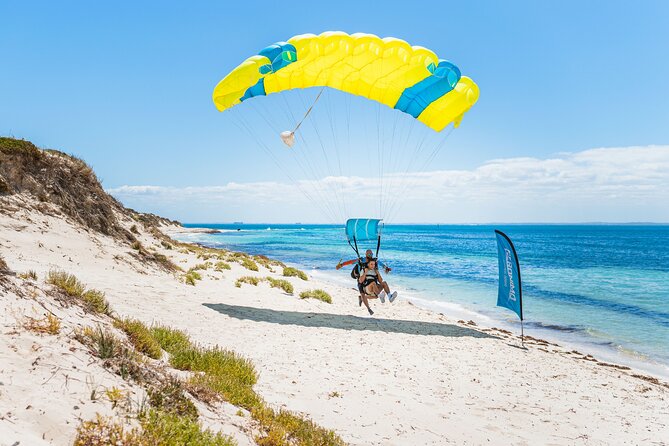
After the parachute deploys at 5,000 feet, you get a spectacular 5-minute parachute ride. That’s time to relax your grip a little, look around more calmly, and enjoy the glide.
Then comes the landing: you land on the beach. That detail sounds simple, but it’s a big deal for the emotional payoff. You don’t “vanish” into a field and walk away. You land where your people can see you come down, and the day closes with that immediate wow moment.
One small review detail that I liked: staff reportedly helped with getting people from the beach to watch and then back again in at least one situation. It’s not something you should assume for every booking, but it does fit the broader pattern of this operator being organized and friendly.
If you’re bringing a family member or a friend to watch, beach landing also makes their job easier. They can focus on one location instead of trying to figure out where you’ll touch down.
Price and Value: What $270 Buys You (and What It Doesn’t)
At $270 per person, this isn’t the cheapest activity in the area—but it’s also not overpriced for what you’re getting. You’re paying for:
- a tandem jump from 10,000 ft or 15,000 ft
- up to 66 seconds of freefall at around 200 km/h
- a parachute landing on the beach
- a small group format (limited to 3 participants)
- an English-speaking instructor
What’s not included:
- transport to and from Rottnest (including ferry tickets)
- the video and photo package (available for purchase on the day)
That’s where value planning matters. If you’re budgeting from Perth or Fremantle, your total cost depends on ferry timing and transport choices you make yourself.
Is the optional photo/video worth it? Based on feedback, many people say yes. One recurring theme is that the professionally edited, high-definition package feels worth the money because it captures the moment you’ll forget while your body is busy processing 200 km/h freefall. If you like souvenirs you can rewatch, plan to buy it on the day.
Small Group Format: Limited to 3 Participants
The listing calls out a small group with up to 3 participants. In real terms, this usually means:
- less waiting around
- more attention from staff
- a calmer day overall
During busy periods, big-group operations can feel like a production line. Here, the limit to 3 participants keeps things more personal and makes it easier for instructors to tailor their safety and reassurance to each person’s needs.
In feedback, the vibe is consistently supportive. People mention feeling at ease from start to finish, with names like Jimmy and Paul showing up as part of the team’s identity and hospitality.
Photo and Video: Get It If You Want a Real Keepsake
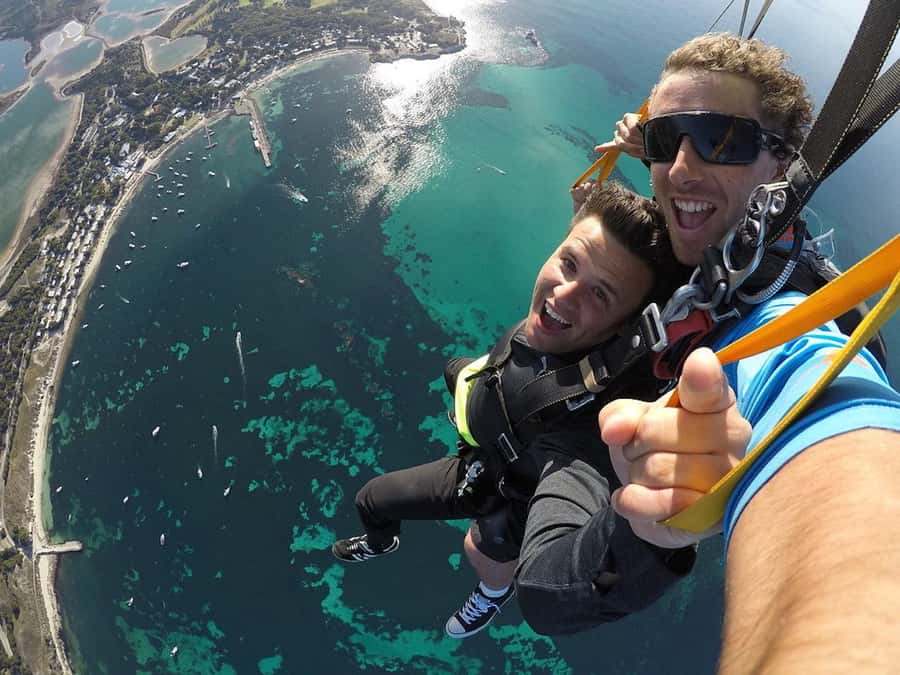
On the day, you can purchase a professionally edited high-definition video and photos package. It’s not included in the base price, but you don’t need to pre-book it.
If you’re the type who likes to document experiences, this is one of those activities where you’ll be glad you have footage. You’ll be too focused on freefall and the sky to truly “notice everything” in the moment, and the edit turns it into something you can share and remember accurately.
One review even suggests buying the video and picture package is worth it. If you’re undecided, I’d treat it like this: if money is tight, skip it; if you want a keepsake and you’ll likely rewatch it later, plan to add it.
Who This Suits Best (and Who Should Skip It)
This experience is built for thrill seekers, but it’s also built around safety screening. That’s why the eligibility rules matter.
This activity is not suitable for:
- children under 16
- people with heart problems
- people with pre-existing medical conditions
- people over 200 lbs (91 kg)
- people over 209 lbs (95 kg)
There’s also a case-by-case note: passengers weighing more than 95 kilograms are assessed case by case.
Children aged 16–17 must be accompanied by an adult or legal guardian.
Beyond health and age, there are also simple rules for what you wear. Bring:
- comfortable clothes
- closed-toe shoes
Not allowed:
- sandals or flip flops
And one more: unaccompanied minors aren’t allowed.
If you meet the guidelines and you’re looking for a memorable Rottnest experience that’s different from beaches and viewpoints, this is a strong pick.
Should You Book This Rottnest Island Tandem Skydive?
I think this is worth booking if you want a high-impact, very visual experience over Rottnest Island, and you like the idea of being guided end to end by an instructor in a small group. The combination of altitude choice, meaningful freefall time, and a clear 5-minute parachute ride makes it feel like a complete experience rather than a quick stunt.
Book with extra flexibility if weather is unpredictable during your dates. The jump is weather dependent, and the day can shift. Also, you’ll handle your own way to Rottnest since ferry tickets and transport aren’t included—so make sure your broader schedule can absorb that.
If you want a calm, reassuring atmosphere for a first-timer, the instructor feedback stands out, with names like Nick, Darcy, and Heath showing up as part of that supportive experience. If you’re worried about nervousness, this is the kind of activity that’s designed to work with it, not fight it.
FAQ
Where do I meet for the tandem skydive?
You meet at the Rottnest Island Terminal Building at Rottnest Airfield. It’s about a 15-minute walk from the Rottnest Island jetty.
Do I need ferry tickets or transport included in the price?
No. Transport to and from Rottnest Island isn’t included, and ferry tickets are not included. You need to make your own way to Rottnest.
What altitudes can I choose?
You can jump from either 10,000 ft or 15,000 ft.
How long is the freefall?
Freefall is 30 to 66 seconds, depending on your chosen altitude.
What speed and timing should I expect during the jump?
During freefall, you travel at about 200 km/h. Your parachute is deployed at 5,000 feet, followed by a 5-minute parachute ride.
Is the video and photo package included?
No. The video and photo package is available for purchase on the day, but it isn’t included.
What should I wear and what isn’t allowed?
Wear comfortable clothes and closed-toe shoes. Sandals or flip flops aren’t allowed.
Who can’t skydive?
It’s not suitable for children under 16, people with heart problems, people with pre-existing medical conditions, and it has weight limitations. Eligibility is assessed on the day by the chief safety instructor.
What if weather affects the booking?
All bookings are weather dependent. You should phone 1 hour prior to your Rottnest Island travel departure time to confirm the weather is suitable.
More Tour Reviews in Rottnest Island
- From Perth: Rottnest Island Full-Day Bike and Ferry Trip
★ 4.7 · 2,548 reviews - Rottnest Island Tandem Skydive
★ 5.0 · 258 reviews - Rottnest Island: Grand Bus and Train Tour with Lunch
★ 4.6 · 106 reviews - Rottnest Island Segway Tour: Fortress Adventure Tour
★ 5.0 · 105 reviews - Rottnest Island ECO E Bike Tour
★ 5.0 · 81 reviews
For the Fearless
- Rottnest Island Tandem Skydive
★ 5.0 · 258 reviews - Fremantle: Rottnest Island Skydive and Ferry Package
★ 5.0 · 54 reviews - Rottnest Skydive + Fremantle Ferry Package
★ 5.0 · 52 reviews - Rottnest Skydive + Hillarys Ferry package
★ 5.0 · 20 reviews - Rottnest Skydive + Perth Barrack St Ferry package
★ 5.0 · 11 reviews
More Ways Over to Rottnest
- From Perth: Rottnest Island Full-Day Bike and Ferry Trip
★ 4.7 · 2,548 reviews - Rottnest Island Tandem Skydive
★ 5.0 · 258 reviews - Rottnest Island: Grand Bus and Train Tour with Lunch
★ 4.6 · 106 reviews - Rottnest Island Segway Tour: Fortress Adventure Tour
★ 5.0 · 105 reviews - Rottnest Island ECO E Bike Tour
★ 5.0 · 81 reviews
Just Landed: Fresh Perth Reviews
- Rottnest Coastal Explorer Tour★ 5.0 · 6 reviews
- One Way Seaplane Flight – Perth to Rottnest Island★ 4.0 · 6 reviews
- Twilight Sail from Rottnest Island★ 5.0 · 7 reviews
- Rottnest Island Lakes and Bays Guided Hike★ 4.5 · 7 reviews
- Rottnest Skydive + Perth Barrack St Ferry package★ 5.0 · 11 reviews
- Rottnest Fortress Adventure Segway Package★ 4.4 · 11 reviews
Rottnest Island Ferries & Bike Hire, compared.
 ★ 4.7Rottnest Island Full-Day Bike and Ferry TripFrom $842,548 reviews
 ★ 4.6Rottnest Island Ferry and Bus TourFrom $991,246 reviews
 ★ 4.6Rottnest Island Ferry and Bike Day TourFrom $87805 reviews
 ★ 4.5Discover Rottnest with Ferry & Bus TourFrom $102743 reviews
 ★ 4.5Rottnest Island Ferry & Bike TripFrom $118627 reviews
 ★ 4.4Rottnest Island Grand Island Day Tour with LunchFrom $134559 reviews
 ★ 4.0Experience Rottnest with Ferry & Bike HireFrom $86461 reviews
 ★ 4.5Rottnest Grand Island Package with Ferry, Tour & Light LunchFrom $138445 reviews
Browse the lists this tour appears in