
Reviewed · HISTORICAL TOURS
Boom-and-Bust: self-guided historical walking tour of Perth
Perth in 200 years, step by step. This self-guided walk connects the Swan River Colony to the city it became, using turn-by-turn audio and old footage to show how money shifts changed streets, buildings, and everyday life. I especially like the decade-by-decade structure that keeps you moving through clear chapters, plus the offbeat Western Australian details (heritage balconies, the London Court air-conditioning story, and Alan Bond’s rise and fall). One drawback to plan for: it’s not a live guide, so you can hit stretches where the narration feels quiet if you prefer constant commentary while walking.
You’ll start at First Contact in Kewdale and finish at The Bell Tower in Perth’s Barrack Square, with a route designed for an afternoon stroll. Most stops are listed as free-entry, and the price is $17.93 per group (up to 5), so it can be good value if you’re traveling with one or more people. A reviewer also mentioned the narration voice named Riley brings local trivia and dad jokes, which is a fun way to keep the story from getting too serious.
The tour works best if you’re the type who likes to watch buildings closely and pause when something catches your eye. Bring headphones, charge your phone/tablet ahead of time, and don’t be afraid to take your time at the stops—you’re given options to linger where you want more detail.
In This Review
- Key takeaways before you go
- Why Boom-and-Bust tells Perth better than a museum day
- Starting at First Contact (Kewdale): get your bearings fast
- His Majesty’s Theatre: the gold boom chapter you can see in the streets
- Raine Square and Hay Street Mall: farming, the gilded era, and a reset after the Great Depression
- Council House: minerals meet modernism
- Quay Perth and the Esplanade: feel the impact of the 1980s boom
- The Bell Tower finish in Barrack Square: boom-and-bust continues
- The stories you’ll want to keep an eye out for (even when they’re not on the sign)
- How long it really takes: 1 to 4 hours depends on how you walk
- Price and value: what you actually get for $17.93
- Self-guided pacing: how to handle narration gaps without missing the story
- Who should book this Perth historical walking tour?
- Should you book Boom-and-Bust in Perth?
- FAQ
- Where does the Boom-and-Bust walk start?
- Where does the tour end, and how do I get there?
- How long does the tour take?
- How much does it cost?
- What device do I need, and is the ticket mobile?
- Are the stops free to enter?
- Is free cancellation available?
Key takeaways before you go
- 200 years, decade-by-decade: the story progresses stop after stop, rather than feeling like one long lecture
- Old footage + audio prompts: you’ll compare then-and-now scenes as you walk
- Perth’s quirks are the hook: heritage balconies, Indigenous farming knowledge, modernist art, and more
- A group-friendly price: $17.93 per group (up to 5) can beat per-person tours
- Self-guided pacing is flexible: you can linger, but you may also notice narration gaps while moving
- You end with the boom-and-bust cycle today at The Bell Tower
Why Boom-and-Bust tells Perth better than a museum day
If you only see Perth as it is today, you miss the engine behind the city. This tour is built around the idea that fortunes rise and fall—then those swings leave marks. You’ll see that in what gets demolished, what gets developed, and what kinds of communities and ideas gain power.
What makes the approach work is that it’s not just names and dates. It’s story-based: each chapter links the economic mood of the time to changes in the built environment and social life. That’s why the tour keeps pulling you toward architecture and street-level details, not just distant facts.
I also like that it leans into genuinely Western Australian stories. The route references things like Perth’s obsession with heritage balconies, Indigenous farming knowledge as ancient science, and a modernist art movement described as scandalous. Even if those words don’t mean much to you yet, the tour’s job is to connect them to why Perth looks the way it does.
Freo once it turns dark, more true-crime and laneway walks


Starting at First Contact (Kewdale): get your bearings fast
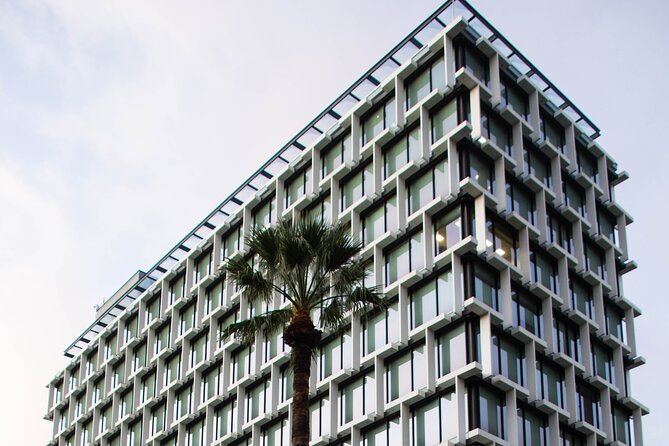
Your walk begins at First Contact, 4 Aitken Way, Kewdale WA 6105. This start point matters because it frames what Perth was trying to become before it became a confident city. The tour kicks off with a self-guided introduction that includes audio commentary plus historical footage and venue recommendations along the route.
Plan to spend a little extra here if you’re the sort who likes context. The first chapter sets the tone for the whole afternoon: it moves from First Contact toward the struggles of early colonial life at the Swan River Colony, then keeps building toward later booms and modern Perth.
Practical tip: when you start, take 30 seconds to confirm the audio is playing and your map direction is correct. After that, just follow the prompts. The route is designed for walking, with each stop paced like a short chapter rather than a long museum exhibit.
His Majesty’s Theatre: the gold boom chapter you can see in the streets
Stop two after the starting area brings you to His Majesty’s Theatre, where the tour highlights WA’s first gold boom. Ten minutes here is enough to grasp the story rhythm: money comes in, the city changes quickly, and later you realize those earlier surges shaped what was built—and what got rebuilt or replaced.
Even if you don’t go inside the theatre (the tour description is focused on the storytelling point), the value is in using the building as a time marker. It’s the kind of stop that encourages you to look at the surrounding streets and ask: if wealth surged here, what kinds of spaces would that wealth demand?
If you’re sensitive to crowds, this is a good “quick win” stop. You can get the narrative without needing a long detour or a ticketed experience at every single location.
Raine Square and Hay Street Mall: farming, the gilded era, and a reset after the Great Depression
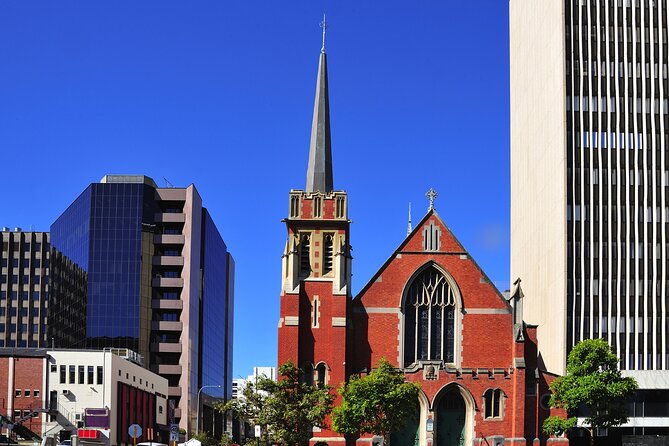
Next you’ll head through the Raine Square area, with Heritage King St as a backdrop for a chapter about farming in Western Australia. This is one of the tour’s smartest decisions, because it prevents Perth’s story from being only about mining or finance. Farming ties the colony’s survival and growth to land knowledge and food systems—an angle you’ll keep feeling as the tour moves into later wealth cycles.
A short walk continues to Hay Street Mall, where the tour covers Perth’s gilded era and its recovery from the Great Depression. This pairing works because it gives you a “before and after” sense of how quickly prosperity can morph into hardship, then into a different kind of optimism.
What to do here: slow down and scan for architecture and street character that feels “stately” versus “practical.” The tour’s audio cues are there to point you at what to notice, but you’ll get more out of it if you treat the mall like a timeline—each location is a clue about what kind of city people were trying to build.
Perth at footpace, a few more wanders

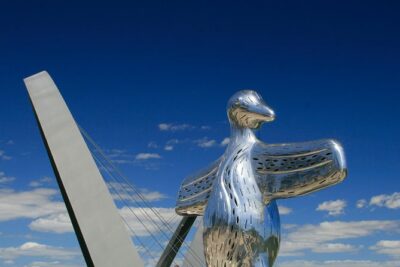
Council House: minerals meet modernism
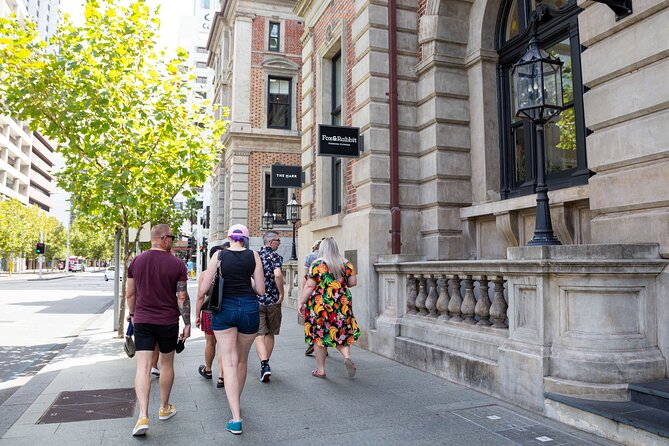
At Council House, the tour shifts into a chapter about minerals and modernism. This is where Perth’s global-style ambition starts to become visible in a local way. The narrative connects mining wealth to design and civic identity—how new money can translate into new tastes and new construction priorities.
Ten minutes is not long, so keep your expectations realistic. Think of this stop as an anchor point: it helps you understand why later “boom” buildings and art and public ideas show up where they do. If you’re walking with friends, it’s also a good place to compare notes in the moment—ask each other what detail caught your attention.
Quay Perth and the Esplanade: feel the impact of the 1980s boom
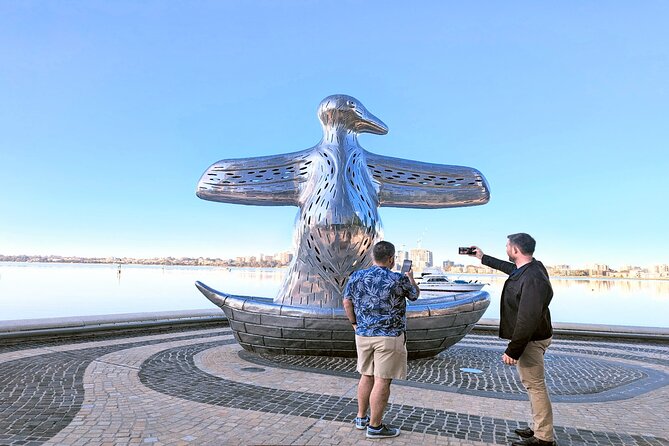
The tour then goes to Quay Perth, focusing on Perth in the 1980s. The route description points you to the buildings along The Esplanade, with then-and-now comparisons and references including the Former Esplanade Hotel.
This is a practical stop for two reasons. First, it’s visually easy to spot changes in the waterfront and surrounding precincts. Second, the audio format encourages you to compare your immediate view with a historical framing, which helps you understand what “boom” looked like in real estate and urban planning—not just in headlines.
If you’re visiting on a warm day, keep water handy. The waterfront can be windy or sunny depending on conditions, and the tour pacing can mean you’re out in open space between stops.
The Bell Tower finish in Barrack Square: boom-and-bust continues
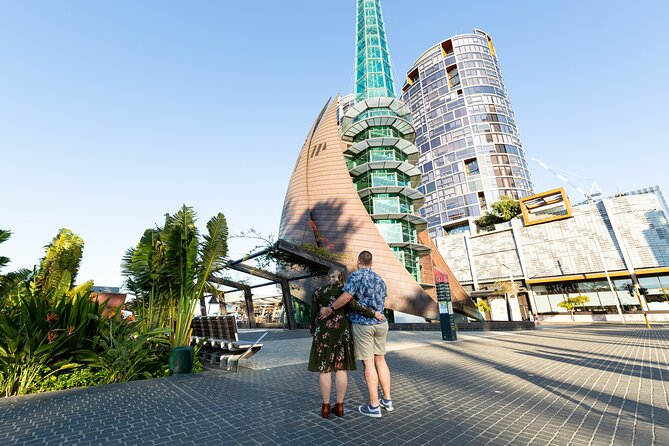
Your last stop is The Bell Tower in Barrack Square (end point listed at Barrack Square, Riverside Dr, Perth WA 6000). It’s described as a short walk from Elizabeth Quay, and the directions note it’s easily accessible from Esplanade Train Station and the FREE Blue CAT bus route.
The tour’s ending here is fitting: you get the final story beat about how Western Australia’s boom-and-bust cycle continues today. It’s a good way to close the loop, because you’re not only learning about past swings—you’re also learning how the city keeps responding to them.
One key detail: Bell Tower admission is not included, so if you want to go inside, plan for that separately. If you’re just there for the story and the views, the exterior and surrounding precinct are still a strong “wrap-up” moment.
The hours shown in the info are listed as open all day in the provided schedule, but I’d still treat it as “check before you go,” especially if your timing is tight.
The stories you’ll want to keep an eye out for (even when they’re not on the sign)
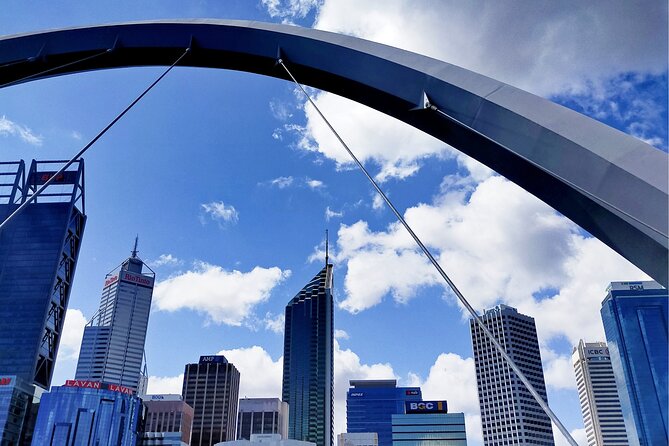
The tour description promises several standout Perth stories, and they work best when you treat them like “clues” rather than trivia. Here are the kinds of things you should actively look for as you move through the route:
- Heritage balconies obsession: the tour uses this as a way to talk about identity and preservation. As you pass older facades, look at the details—balconies, verandahs, and how design signals status or climate adaptation.
- Indigenous farming knowledge: it reframes “land use” as science and practice, not an afterthought. Even without a lecture at every turn, you’ll come away with a better sense of how knowledge shapes settlement.
- A modernist art movement described as scandalous: this angle helps you see culture as part of economic confidence. When a city believes it can experiment, you often get art that pushes boundaries.
- London Court and air-conditioning: the tour points you at the idea that everyday technology and comfort can show up earlier than you’d expect in a place you think of as sun-soaked.
- Alan Bond’s rise, fall, and rise again: this is the kind of story that makes booms feel personal, not abstract. You’ll understand how financial events can reshape reputations and the physical city.
You don’t need to memorize everything. The trick is to notice how each story ties back to the core theme: Perth changes when fortunes change.
How long it really takes: 1 to 4 hours depends on how you walk
The tour is flexible: duration is listed as about 1 to 4 hours, and the stop descriptions are built around short segments (often around 10 minutes per stop). If you move quickly and only do the core narration, you’ll likely finish in the lower range.
If you like to stop for photos, take in architecture, or pause for a drink, you’ll naturally stretch it toward the longer end. The tour also mentions extended-stay options, which means you can choose to spend more time at whatever chapter grabs you.
A good strategy for most people: aim for an easy “2-hour loop” if you’re combining this with other plans. If the day is slow and you want to really absorb it, plan closer to half a day and treat each stop like a mini exhibit.
Price and value: what you actually get for $17.93
At $17.93 per group (up to 5), the cost is not what would scare you—it’s the structure that makes it worth it. You’re paying for:
- audio and narration (with historical footage prompts),
- turn-by-turn navigation on your phone/tablet,
- stop-by-stop routing through a central city walk,
- and venue recommendations that help you build breaks into the day.
Because it’s per group, it tends to work well when you travel as two or three. It also makes sense if you don’t want to pay per person for a standard guided tour style where you sit and listen the whole time.
Just keep expectations aligned: you’re not buying entry into every major site, because some stops are free-entry and the Bell Tower admission isn’t included. If you want a ticketed experience at the end, your budget should include that extra cost.
Self-guided pacing: how to handle narration gaps without missing the story
A self-guided tour can be amazing, but only if you don’t expect it to behave like a person walking beside you. One point that came up in feedback is that there can be long moments of silence between story bits.
Here’s how to reduce that frustration:
- Keep your phone volume up enough that you don’t miss audio cues while crossing busy streets.
- When you arrive at a stop, pause for 20–40 seconds before you start walking again. Many tours front-load the narration at the stop.
- Use the built-in options to linger longer or dig deeper at stops where the content hooks you. That’s meant to replace the in-person “in between” conversation you’d get from a live guide.
If you strongly prefer nonstop guidance every second, a traditional guided tour might fit you better. But if you’re okay with short, story-driven narration blocks and you like being able to slow down, this format can feel liberating.
Who should book this Perth historical walking tour?
I’d point you toward Boom-and-Bust if you:
- like history you can walk through in real time,
- enjoy architecture and street details more than indoor exhibits,
- want an afternoon activity that fits into a flexible schedule,
- and travel with friends or family so the group price makes sense.
It’s also a good match for people who prefer not to commit to a fixed tour start with a live group. The tour is described as private for your group, and it’s set up so you use your own device.
You’ll get the most out of it if you’re willing to look up from your map and actually watch the buildings as the story changes.
Should you book Boom-and-Bust in Perth?
If you want Perth history that’s built for walking—complete with audio, historical footage prompts, and a clear story arc—this tour is an excellent way to spend a sunny afternoon. The biggest win is the way booms and busts explain not just what happened, but why Perth looks the way it does.
Skip it only if you need constant narration like a live guide and you’re easily thrown by gaps in audio while you’re in motion. If that doesn’t bother you, it’s a smart, budget-friendly way to see a lot of Perth’s “why” without paying museum prices for every stop.
FAQ
Where does the Boom-and-Bust walk start?
It starts at First Contact, 4 Aitken Way, Kewdale WA 6105, Australia.
Where does the tour end, and how do I get there?
The tour ends at The Bell Tower in Barrack Square, Riverside Dr, Perth WA 6000. The info notes it’s accessible from Esplanade Train Station and the FREE Blue CAT bus route.
How long does the tour take?
The duration is listed as about 1 to 4 hours.
How much does it cost?
It’s $17.93 per group, for up to 5 people.
What device do I need, and is the ticket mobile?
The tour is self-guided using your phone or tablet, and it uses a mobile ticket.
Are the stops free to enter?
Most stops are described as free admission, but The Bell Tower’s admission ticket is not included.
Is free cancellation available?
Yes. The experience offers free cancellation, and you can cancel up to 24 hours in advance for a full refund.
More of Perth on Foot
- Discover Perth Walking Tour: History, Art, Local Insights + More!
★ 5.0 · 458 reviews - Discover Perth Walking Tour: History, Art, Sights + More!
★ 4.9 · 183 reviews - Perth: True Crime Guided Walking Tour
★ 4.4 · 17 reviews - Perth: Asian Street Food Walking Tour – Foodie Experience
★ 5.0 · 13 reviews - Perth: Bar & Street Art Walking Tour
★ 4.6 · 5 reviews
More Tour Reviews in Perth
- From Perth or Fremantle: Rottnest Island Ferry and Bus Tour
★ 4.6 · 1,246 reviews - Pinnacles Desert Sunset Dinner and Stargazing Tour
★ 5.0 · 1,034 reviews - Perth: Hop-on Hop-off Sightseeing Bus Ticket
★ 4.5 · 708 reviews - Swan Valley Winery Experience – Full Day Coach Tour
★ 5.0 · 702 reviews - Swim with Wild Dolphins Day Tour
★ 4.5 · 669 reviews
Freo After Dark
- PERTH BAR+STREET ART TOUR: Hidden Secrets, Laneways + Good Times!
★ 5.0 · 183 reviews - Perth’s True Crime Tour
★ 5.0 · 19 reviews - Perth: True Crime Guided Walking Tour
★ 4.4 · 17 reviews - Perth: Bar & Street Art Walking Tour
★ 4.6 · 5 reviews - Perth City, Laneways and Hidden Gems Photographic Walk
★ 5.0 · 4 reviews
Just Landed: Fresh Perth Reviews
- Pinnacles Day Tour★ 5.0 · 3 reviews
- Orchids and Wildflowers Photographic Day tour from Perth★ 5.0 · 3 reviews
- Boom-and-Bust: self-guided historical walking tour of Perth★ 4.5 · 3 reviews
- 3 Day Pink Lake and Margaret River tour★ 5.0 · 3 reviews
- 2 Days Kalbarri and Pink Lake Tour Monday Departure★ 5.0 · 3 reviews
- From Perth: Australian Animal Night Safari★ 4.7 · 3 reviews
Historical Tours, compared.
 ★ 4.6Wave Rock, York and Aboriginal Cultural TourFrom $176498 reviews
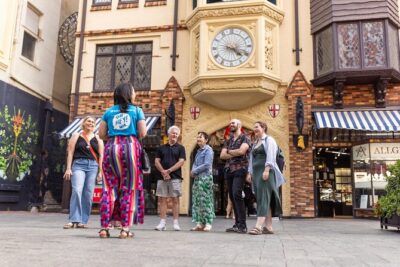 ★ 5.0Discover Perth Walking Tour: History, Art, Local Insights + More!From $51458 reviews
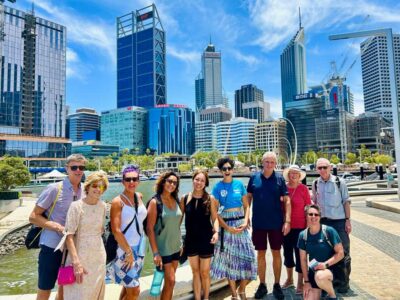 ★ 4.9Discover Perth Walking Tour: History, Art, Sights + More!From $50183 reviews
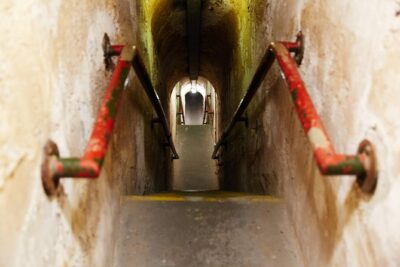 ★ 4.5Rottnest Island Grand Tour Including Lunch and Historical Train RideFrom $7871 reviews
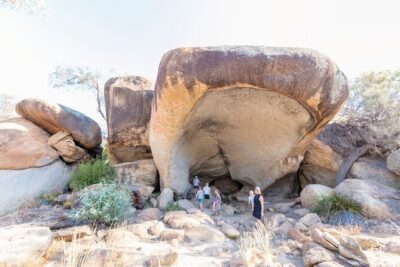 ★ 4.0Full-Day Wave Rock & Historic YorkFrom $20824 reviews
 ★ 4.0Rottnest Island Historical Train and Tunnel Tour from Hillarys Boat HarbourFrom $9320 reviews
 ★ 5.0THE WHEATBELT & NEW NORCIA day tour of history, taste & nature.From $1828 reviews
 ★ 4.9Historic Electric Bike TourFrom $844 reviews
Browse the lists this tour appears in