
Reviewed · FREMANTLE & TRUE CRIME WALKS
Fremantle – Convicts, Culture & Street Art
Prison stories and street art in two hours. This Fremantle walk pairs convict-era escape stories and Indigenous connections with real street-level art and landmark stops, so you get the place, not just the facts. You’ll move from Fremantle’s prison past to the walls and walkways that show how the city thinks about itself now—without needing a full-day plan.
I really like the way the guide keeps it human and easy to follow, especially when hosts such as Sanya and Ann are on the route. I also enjoy that the tour is paced for a short window: it’s about 2 hours, in a small group, and you get coffee and/or tea while you’re learning.
One thing to plan for: it’s a walking tour and it depends on good weather, so wear comfortable shoes and bring a light layer in case the sky decides to change its mind.
In This Review
- Key highlights
- Getting Oriented at Fremantle Town Hall (Your Walk Starts with Context)
- FOMO Freo and Walyalup Koort: Street-Level Art Meets Real Daily Life
- The Pedestrian Trade Streets: How the City’s Layout Tells Stories
- Fremantle Ports and C.Y. O’Connor: Industry with a Real Name
- Whalers Tunnel: Limestone, Commerce, and a Shortcut That Became a Story
- The Fremantle Round House: First Prison, Oldest Building, and the Escape Stories
- Bather’s Beach and Esplanade Park: First Settlers, Reclamation, and Aboriginal History
- Ending on South Terrace and the Cappuccino Strip: Your Easy Finish Line
- Price and Value: Why $46.62 Can Make Sense Here
- Who Should Book This Tour (and Who Might Want Something Else)
- Should You Book Convicts, Culture and Street Art in Fremantle?
- FAQ
- How long is the Fremantle Convicts, Culture & Street Art tour?
- Where does the tour start?
- What time does the tour start?
- What is the price per person?
- How many people are in the group?
- What’s included in the tour price?
- Do I need a printed ticket?
- Are service animals allowed?
- What happens if the weather is bad?
- What is the cancellation policy?
Key highlights
- Round House stop focused on the city’s first prison and oldest building
- Whalers Tunnel walk-through cut into the limestone cliff
- C.Y. O’Connor credited with enabling Fremantle’s port
- Walyalup Koort and FOMO Freo mix art, shops, and an eat-hub atmosphere
- Bather’s Beach and Esplanade Park for first-settler arrivals and Aboriginal history
- Coffee and/or tea included during the 2-hour circuit
Getting Oriented at Fremantle Town Hall (Your Walk Starts with Context)
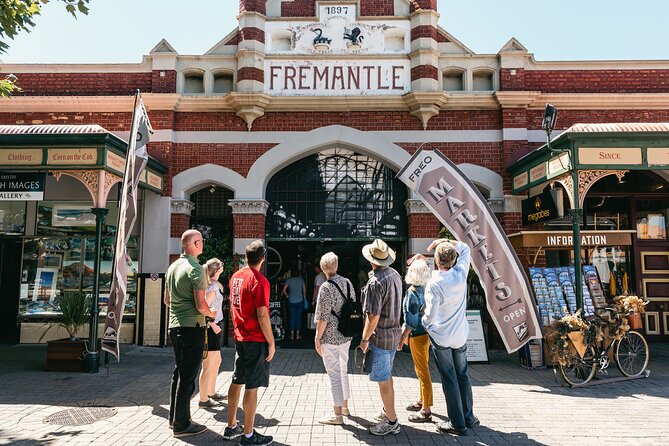
The tour kicks off at the Fremantle Visitor Centre on High Street, then you begin with an orientation right in the central area near Fremantle Town Hall. This early moment matters because it sets the mental map. Instead of treating the city like disconnected sights, you start hearing how the shoreline, the port, and the streets connect to the people who lived here—sentenced, employed, traded, and still here in different ways.
It’s also a good “speed run” for your first time in Fremantle. If you’re trying to understand where everything is without spending hours studying, this start helps you get your bearings fast.
Freo once it turns dark, more true-crime and laneway walks



FOMO Freo and Walyalup Koort: Street-Level Art Meets Real Daily Life

One of my favorite parts is how quickly the tour moves from history talk to the modern Fremantle streetscape. You spend time around FOMO Freo at Walyalup Koort—a hub that blends art, architecture, culture, retail, and dining into a place you can actually walk through. Expect independently owned shops, a hawker-style food court vibe, and general activity that feels like a neighborhood meeting point rather than a theme park.
Then you’ll continue through the pedestrianised mall area between the Cappuccino Strip and Fremantle’s renewed civic heart at Walyalup Koort. What I like here is the “then and now” contrast. You’re not only hearing about colonial-era movement and industry—you’re also seeing how the city refreshes itself with street art in the public realm. It’s an easy way to understand that Fremantle’s story keeps getting written on its walls.
Small consideration: if you’re looking for lots of time to shop or sit down for a full meal, this segment is short by design. It’s built for walking and story, not shopping marathons.
The Pedestrian Trade Streets: How the City’s Layout Tells Stories
As you walk along a key trade street in the heart of historic Fremantle, the guide’s job is to connect urban design to human behavior. In towns like this, street life isn’t random. Trade streets form the backbone of commerce—where goods needed to move, where people needed to gather, and where reputation traveled faster than ships.
This is the kind of stop that works best when you look up as you walk. Don’t just watch your feet. Glance at building frontages and street alignment, because the story often lives in the lines. The tour gives you a reason to notice details that you’d otherwise ignore.
And yes, it stays grounded. You’re not stuck in a lecture hall. You’re outside, moving, with short explanations that land right where they belong.
Fremantle Ports and C.Y. O’Connor: Industry with a Real Name
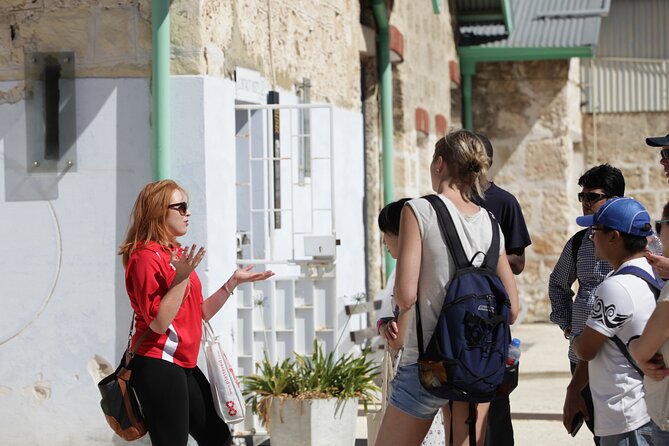
Fremantle’s port story is a major thread, and this tour handles it in a practical way. You’ll spend time at Fremantle Ports and learn how the port was created in the late 1800s and early 1900s, including the role of C.Y. O’Connor, the man credited with making it possible.
Why this stop is valuable: ports explain everything downstream—work, migration, construction, shipping schedules, and why certain infrastructure mattered enough to be engineered into place. It’s one thing to hear the word port. It’s another to understand that it was a named effort tied to a specific era.
Also, you’re not paying extra for this kind of “big-picture context.” The stops are set up so you can experience key places without adding a stack of paid admissions. That makes the tour feel like a smart use of a short afternoon or morning.

Whalers Tunnel: Limestone, Commerce, and a Shortcut That Became a Story

Then you hit Whalers Tunnel, where you walk through a passage cut directly into the limestone cliff. This tunnel was used to transport whale products from the waters edge up to High Street. That alone is a great example of how industry shaped the physical city.
But the tour adds another layer: the tunnel has been used for more than commerce. Even without getting lost in long technical explanations, you leave with a better sense of how places evolve. A tunnel like this isn’t just a leftover corridor—it’s evidence of how people solved logistics and then repurposed space as the city changed.
Short pause: if you dislike enclosed spaces or you want to take photos without rushing, give yourself that mental “slow down” permission here. The tunnel is brief, but it’s distinct enough that you’ll want a minute to look around and take it in.
The Fremantle Round House: First Prison, Oldest Building, and the Escape Stories
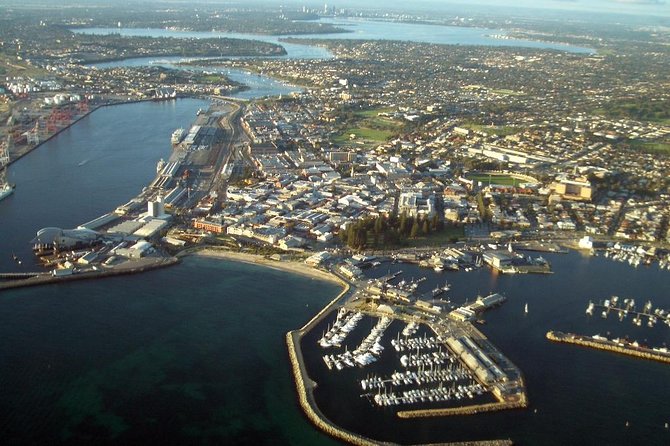
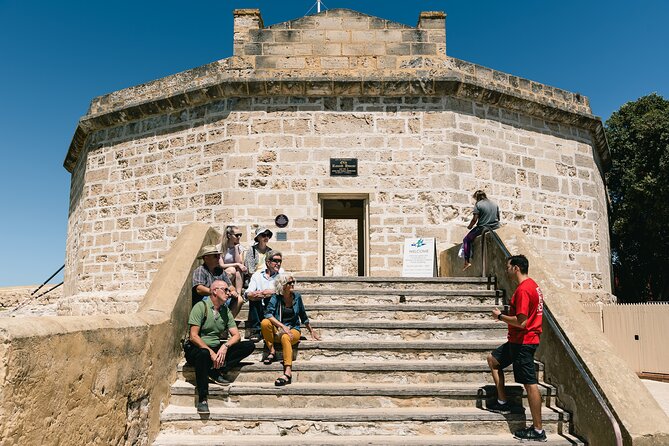
The Fremantle Round House stop is the anchor for the convict part of the tour. You’ll check out the oldest building in the city and its first prison. This is where the convict-era stories—including daring prisoner escape stories—become more than abstract history.
What works well is how this stop helps you connect three things:
- the idea of punishment and detention (why the place mattered),
- the physical structure of the site (why it’s memorable in the landscape),
- and the human impulse to resist confinement (how escape stories fit the broader narrative).
The time here is short, but it’s concentrated. You get enough to understand why this building is repeatedly referenced in Fremantle’s story, and then you move on before the tour drags into repetition.
Practical thought: the roundhouse stop is one of those places where comfortable walking shoes pay off. You’ll be spending time looking, not just passing through.
Bather’s Beach and Esplanade Park: First Settlers, Reclamation, and Aboriginal History
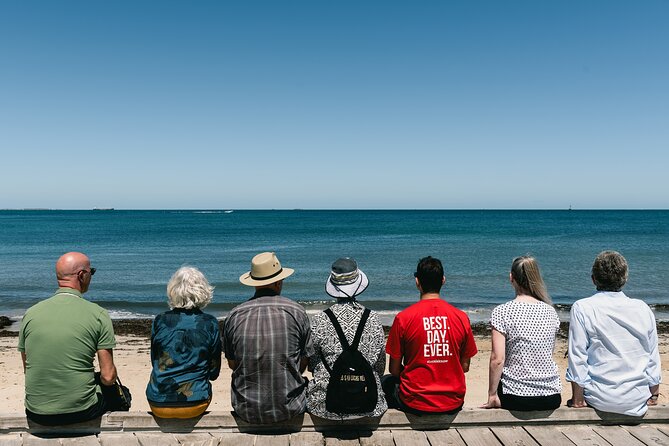
After the convict and port sections, the tour shifts toward the shoreline and the land itself. At Bather’s Beach, you learn where the first settlers to Western Australia came ashore. You might even climb on top of what’s left of the original timber-pilled jetty—so bring shoes that can handle a bit of uneven ground.
This stop is powerful in a quiet way: it makes the settlement story feel immediate because it’s tied to the actual arrival point. You’re not imagining geography. You’re standing near it.
Then comes Esplanade Park, where you learn about the reclamation of the land as well as Aboriginal history of the area. I like that the tour doesn’t leave Indigenous context as a footnote. You get it as part of the “what happened here” picture—alongside the changes in the coastline and how usable land was created over time.
Consideration: because this section is weather-dependent and outdoors, it can feel warmer and windier near the water. If it’s a sunny day, plan for sun protection. If it’s cool, layers help.
Ending on South Terrace and the Cappuccino Strip: Your Easy Finish Line
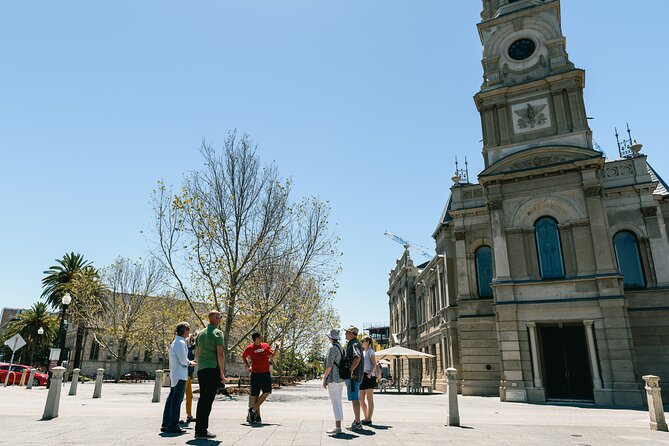
The walk concludes on South Terrace on the famous Cappuccino Strip. This is a smart ending point because it gives you a built-in transition. After two hours of walking and storytelling, you’re ready for a low-key break—coffee, a snack, or just sitting and watching Fremantle life.
Even if you’re not ordering anything fancy, the value is that you end in a lively, central area with easy options. The tour ends where tourists and locals naturally drift, so it’s simple to keep your day going.
Price and Value: Why $46.62 Can Make Sense Here
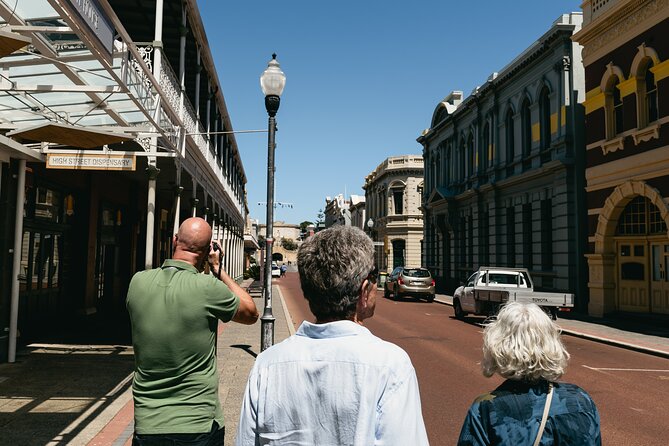
At $46.62 per person for about 2 hours, this tour is priced like a city walk with real stops and a guide who ties it together. You’re not paying for a bus ride. You’re paying for:
- a local host to interpret the places,
- orientation in central Fremantle,
- local history and fun stories,
- and coffee and/or tea.
You also hit major landmarks that are marked as admission ticket free at the stops listed on the route. That matters for value: you’re not stacking extra entry fees on top of the ticket price.
One more value angle: the group size is capped at 12 travelers. For a paid walking tour, that’s an advantage. Smaller groups usually mean the guide can pace explanations and keep it interactive without turning into a crowd-control exercise.
Who Should Book This Tour (and Who Might Want Something Else)
Book it if you want:
- a short, focused introduction to Fremantle,
- convict-era stories that tie to physical locations (Round House, tunnels),
- Indigenous history woven into the walk instead of added later,
- street art and modern culture stops like Walyalup Koort/FOMO Freo,
- and a friendly guide who keeps things clear.
Skip it (or consider a different option) if you need a lot of downtime, hate walking, or want a longer museum-style experience with more time at each site. This one is designed for movement and quick context, not for lingering for hours.
Should You Book Convicts, Culture and Street Art in Fremantle?
Yes—if you’re in Fremantle for a day or even half a day and you want your first impressions to feel meaningful. The route hits the big story anchors: a first prison site, a limestone tunnel tied to whale-era transport, port history with C.Y. O’Connor, and shoreline stops that connect settlement and Aboriginal history. Then you finish where you can relax on South Terrace.
The biggest reason I’d recommend it is the combo: small-group walking + practical context + street art in the middle of it. If that’s your style, $46.62 for a couple hours is a fair deal.
If the weather is great and you’re wearing comfy shoes, this is one of those tours that makes Fremantle click fast—then leaves you free to explore on your own right after.
FAQ
How long is the Fremantle Convicts, Culture & Street Art tour?
It runs for about 2 hours.
Where does the tour start?
The meeting point is the Fremantle Visitor Centre, 155 High St, Fremantle WA 6160.
What time does the tour start?
The start time is 10:00 am.
What is the price per person?
The price is $46.62 per person.
How many people are in the group?
The tour has a maximum of 12 travelers.
What’s included in the tour price?
It includes a professional local host, orientation of central Fremantle, local history and fun stories, and coffee and/or tea.
Do I need a printed ticket?
No. You receive a mobile ticket.
Are service animals allowed?
Yes, service animals are allowed.
What happens if the weather is bad?
The tour requires good weather. If it’s canceled due to poor weather, you’ll be offered a different date or a full refund.
What is the cancellation policy?
You can cancel for free up to 24 hours in advance of the experience for a full refund. If you cancel less than 24 hours before the start time, the amount paid isn’t refunded.
More Street Art in Fremantle
- Fremantle: Convicts, Culture, and Street Art
★ 4.8 · 23 reviews
More Tour Reviews in Fremantle
- From Fremantle: Rottnest Island Ferry and Bike Day Tour
★ 4.6 · 805 reviews - Discover Rottnest with Ferry & Bus Tour
★ 4.5 · 743 reviews - From Fremantle: 2-Hour Luxury Whale-Watching Cruise
★ 4.8 · 455 reviews - Rottnest Grand Island Package with Ferry, Tour & Light Lunch
★ 4.5 · 445 reviews - Fremantle to Rottnest Island Roundtrip Ferry Ticket
★ 4.5 · 218 reviews
Freo After Dark
- Fremantle: Convicts, Culture, and Street Art
★ 4.8 · 23 reviews - Fremantle: True Crime Guided Tour
★ 4.7 · 22 reviews - Fremantle’s True Crime Tour
★ 5.0 · 19 reviews
Just Landed: Fresh Perth Reviews
- Rottnest Island Skydive Including Round Trip Ferry from Fremantle★ 4.5 · 3 reviews
- Luxe Seafood Package with Round Trip Ferry from Fremantle★ 5.0 · 3 reviews
- Quiz Room Perth Immersive Trivia Game★ 3.5 · 3 reviews
- Full Day Sail to Rottnest Island from Fremantle★ 5.0 · 3 reviews
- Fremantle: Historic Electric Bike Tour★ 4.9 · 4 reviews
- Carnac Island Half Day Sail★ 5.0 · 6 reviews
Fremantle & True Crime Walks, compared.
 ★ 5.0PERTH BAR+STREET ART TOUR: Hidden Secrets, Laneways + Good Times!From $46183 reviews
 ★ 4.8Convicts, Culture, and Street ArtFrom $4623 reviews
 ★ 4.7True Crime Guided TourFrom $2422 reviews
 ★ 5.0Fremantle’s True Crime TourFrom $2419 reviews
 ★ 5.0Perth’s True Crime TourFrom $2419 reviews
 ★ 4.4True Crime Guided Walking TourFrom $2417 reviews
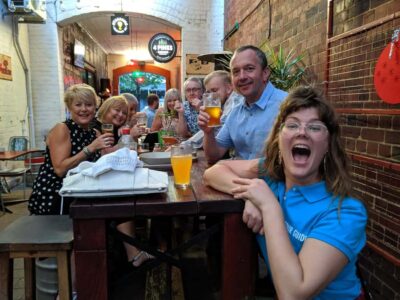 ★ 4.6Bar & Street Art Walking TourFrom $415 reviews
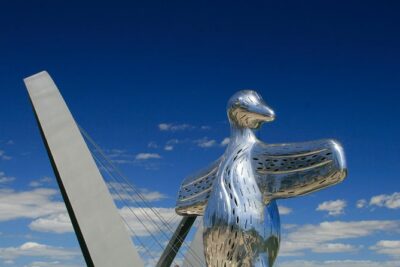 ★ 5.0Perth City, Laneways and Hidden Gems Photographic WalkFrom $1394 reviews
Browse the lists this tour appears in